Udi Aayo Rani Chari · full songHaridevi Koirala
Nepaliउडी आयो रानी चरी, बस्यो सेतो हिमालमा
बुहारीभन्दा दाइजो प्यारो अहिले नेपालमा
English translationThe queen bird came flying and settled on the white Himalaya, and in Nepal today the dowry is dearer than the daughter-in-law.
मुखले त भन्छन् सबले दाइजो हाम्लाई चाहिन्न
साँच्चै दाइजो नलिने त कोही पाइन्न
With their mouths, everyone says they want no dowry, but in truth you will scarcely find one who refuses it.
बाबाले खेत बेची दाइजो मलाई दिए’नि
आफ्ना भन्ने स्वामी पनि पराइ भए’नि
Though my father sold his field to give me dowry, even the husband I called my own became a stranger to me.
ससुराले भन्नुहुन्छ दाइजो थोरै ल्या’की हो
सासूले भन्नुहुन्छ रित्तै आ’की हो
My father-in-law says I brought too little dowry; my mother-in-law says I came empty-handed.
दाइजोले घरमा आँगन–पिँढी खाली रहेन
ससुराको उज्यालो मन भएन
The dowry has filled the house, the courtyard and the veranda, yet my father-in-law’s heart is still not pleased.
पाँच हजारको साडी राखी सासु ज्यु लाइ ढोगदिँदा
कती मन रोए हो मैलाइ फर्काउँदा
When I set a five-thousand-rupee sari before my mother-in-law and bowed to her, how my heart wept as she handed it back.
तीन हजार रुपियाँ दैलो छेक्ने नन्दलाई
केही बाकी रहेन मलाई भन्नलाई
Three thousand rupees for the nanad who blocked the doorway, and there was hardly anything left for me even to speak of.
तोला सुनको सिक्री दिँदा जेठाजुलाई भाछैन
उनको बोली कस्तो छ मलाई थाहा छैन
Even a one-tola gold chain for my husband’s elder brother was not enough, and I do not know what to make of the way he speaks to me.
राम्रै थियो दोसल्ला जेठानी ले साटेकी
दुई दिन आउने आमाजुले कुरै काटेकी
The dosalla my jethani exchanged was fine enough, yet the amaju, who comes for only a day or two, still found things to criticize.
देवरलाई औठी हातमा लाइदियेकै थियेनी
सानो भयो भनेर फिर्ता दियेनी
I had even slipped a ring onto my devar’s hand, and he gave it back, saying it was too small.
हाम्रा बाले दिएको मोटर साइकल चढेर
के काम लायो स्वामी तिम्ले एम.ए. पढेर
Riding the motorcycle my father gave you, husband, what use was the M.A. you studied for?
बुहारी कस्ती पर्छे ससुरालाइ थाछैन
मोटर साइकल दाइजो नल्याई हुदैँ भाछैन
The husband’s family does not care what kind of daughter-in-law they get; what matters now is that she must bring a motorcycle as dowry.
बुहारी असल भन्दापनि दाइजोका भोका छन्
गरिब बाउ आमा सधै रोका छन्
More than wanting a good daughter-in-law, they hunger for dowry, and poor mothers and fathers are forever left crying.
दाइजोले आज भोलि अतिसारै भाको छ
कतिको त अकालमा ज्यानै गाको छ
These days the dowry has grown unbearable; some have even lost their lives before their time to it.
येति दाइजो ल्याउनेको त मन कति रुनी हो
दाइजो ल्याउन नसक्नी लाई कस्तो हुनी हो
If the heart of a woman who brought this much must weep so, what must become of the one who can bring nothing at all?
Words and music by Haridevi Koirala. Full lyrics reproduced here for commentary and study, with the English rendered closely rather than word for word. Song © Music Nepal.
A bride arrives at her husband’s house with enough gifts to fill it. A sari for her mother-in-law. Cash for her husband’s younger sister. A gold chain for his elder brother. A shawl for that brother’s wife. A ring for his younger brother. A motorcycle for her husband. The courtyard and the veranda are no longer bare. And still the mother-in-law says she came “empty-handed.”
That contradiction is the engine of one of the most widely sung Nepali Teej songs of the late twentieth century, Haridevi Koirala’s Udi Aayo Rani Chari. The house is visibly full; the accusation says it is empty. Both statements are made about the same woman on the same day. The song spends the rest of its verses letting the gap between them widen until it stops being a domestic quarrel and becomes a description of how an entire system works.
It opens with an image that has nothing to do with money at all.
उडी आयो रानी चरी, बस्यो सेतो हिमालमा
बुहारीभन्दा दाइजो प्यारो अहिले नेपालमा
The queen bird came flying and settled on the white Himalaya,
and in Nepal today, the dowry is dearer than the daughter-in-law.
A bird on a snow peak, then a thesis stated flatly in the second line. The rest of the song is the proof. Koirala never returns to abstraction. She does not lecture about patriarchy or gendered labour. She simply walks us through a house, gift by gift, relative by relative, and lets the objects testify. That method, argument disguised as inventory, is what makes the song worth reading closely rather than merely humming.
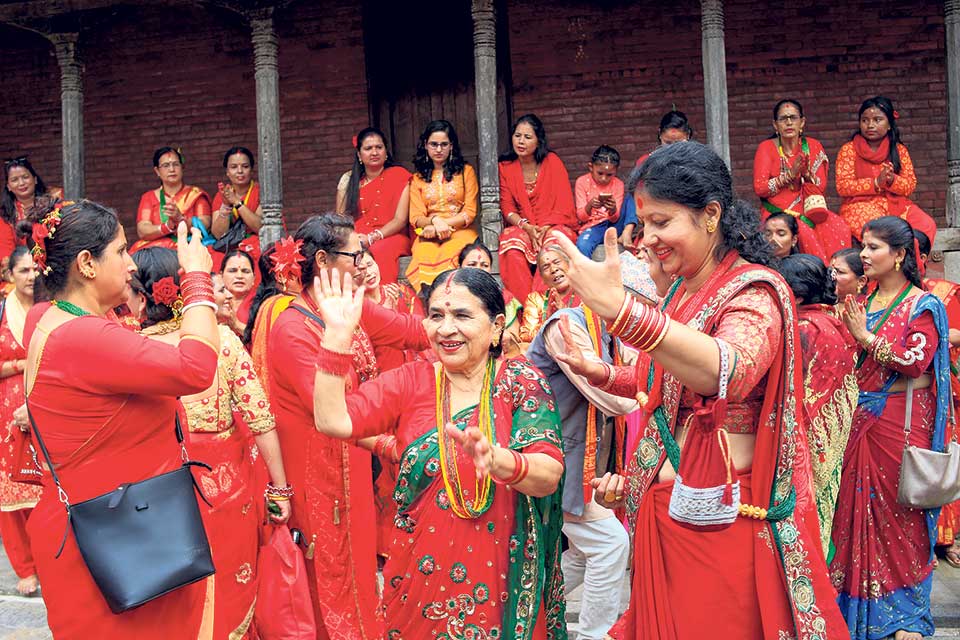
OneThe house she has entered
To hear the song the way its first audiences did, an English-speaking reader has to give up the word “in-law.” It is almost useless here. Nepali kinship vocabulary sorts a married woman’s new relatives with a precision English does not attempt, marking age, gender, and which side of the marriage a person stands on.
Her husband’s mother is her sasu (सासू); his father, her sasura (ससुरा). His elder brother is her jethaju (जेठाजु), and that brother’s wife, senior to her by marriage, is her jethani (जेठानी). His younger brother is her devar (देवर); note that this is the husband’s younger brother, not a relative on her own side. His younger sister is the nanad (नन्द), his elder sister the amaju (आमाजू). Linguistic descriptions of Nepali confirm these are fixed, distinct terms rather than interchangeable labels, and that honorific prefixes like thulo (elder) and sano (younger) sharpen the ranking further.
These distinctions matter because marriage in much of Hindu Nepal has been patrilocal: a bride leaves her maiti ghar (माइतीघर), her natal home, and takes up residence as a buhari (बुहारी) in her husband’s household. Buhari is not simply “daughter-in-law” as a legal fact; it names a role, weighted with expectations of service and deference, that a woman steps into on arrival. In Lynn Bennett’s classic ethnography of high-caste Hindu women in Nepal, a wife occupies an ambiguous and often precarious standing in her husband’s home, valued largely through what she produces and brings to the patriline.
So the bride in Koirala’s song is not joining one man. She is entering a ranked group of parents, brothers, sisters, and their spouses, in which birth order and seniority carry real authority. A younger brother’s wife enters near the bottom of that order. This is why the same woman can cook, serve elders, and defer during every family gathering and still be spoken of as though her presence were provisional. None of this is universal. Practices vary sharply by caste, ethnicity, region, class, and generation, and Nepal has changed a great deal. But the hierarchy the song describes was real and widespread enough to have generated its own vocabulary.
TwoFollowing the objects through the house
Koirala could have written a single line about greedy in-laws. Instead she itemizes. The choice is the whole point: it turns a complaint into a map. Watch where the gifts go.
The mother-in-law is offered a five-thousand-rupee sari, presented with a bow, and in the bride’s telling it is handed back. The nanad, the husband’s younger sister, receives three thousand rupees for dailo chhekne (दैलो छेक्ने). This one needs to be understood correctly, because on its own it is a happy custom, not a grievance. When a newly married couple reaches the groom’s home, his sisters and other young female relatives cheerfully block the doorway and refuse to let them in until they are paid a little money or given a small gift. It is a game, played for laughs, in the same festive spirit as the sisters who steal the groom’s shoes at the wedding and hold them for ransom. Everyone knows the door will open. The demand is affectionate, the sums are token, and the point is to welcome the couple with teasing rather than to take anything from them.
Koirala keeps the custom but changes what surrounds it. In her song the three thousand rupees for the door no longer sits among jokes and laughter. It sits in a column next to the sari, the gold, the shawl, the ring, and the motorcycle, every item weighed and found wanting. The ritual has not turned sinister; what has changed is the house it enters. In a household keeping a running account of the bride’s worth, even a game of welcome gets tallied. That is the quiet horror of the line.
The jethaju, the husband’s elder brother, is given a gold chain weighing a tola (about 11.66 grams). It is not enough. The jethani receives a dosalla (दोसल्ला), a formal shawl given as a mark of respect, and even that passes without goodwill, while the amaju, the husband’s elder sister, who visits for only a day or two, still finds something to criticize.
Then the younger brother. The line is small and it stings.
देवरलाई औठी हातमा लाइदियेकै थियेनी
सानो भयो भनेर फिर्ता दियेनी
I had even slipped a ring onto my devar’s hand,
and he gave it back, saying it was too small.
Taken alone the incident is trivial: a ring the wrong size. Inside the song it is a verdict. Every object has become a test of whether the bride’s family provided something expensive enough, appropriate enough, generous enough. The sari is judged. The cash is judged. The gold, the shawl, the ring. What no one in the house appears to weigh is the woman herself. She disappears behind the things she carried in.
This is the song’s first real argument, and it is worth stating once, plainly, because everything later builds on it: dowry here is not a transaction between a husband and a wife. It is a distribution across a whole kin group. A marriage joins families, so the expectations fan out. What did his mother get, his father, his brothers, their wives, his sisters? Koirala names each recipient precisely so we cannot mistake the scope. The bride is not negotiating with one person. She is being assessed by a network.
A note of caution the song itself invites: gift-giving at a Nepali wedding is not automatically coercion. Clothes, jewellery, ceremonial offerings, and exchanges with the groom’s kin are woven into many marriage traditions, and the distribution of gifts among affinal relatives is well documented and varies enormously by community. Koirala’s target is the moment a gift stops being voluntary and becomes the price of a woman’s acceptance. That is also, almost exactly, the line Nepali law tries to draw.
Three“What use was your M.A.?”
Midway through, the bride turns from the relatives to her husband, and the song sharpens to a point.
हाम्रा बाले दिएको मोटर साइकल चढेर
के काम लायो स्वामी तिम्ले एम.ए. पढेर
Riding the motorcycle my father gave you,
husband, what use was the M.A. you studied for?
The word for husband here is swami, which in older usage carries the sense of “lord” or “master.” Earlier in the song the bride has already said that even the swami she could call her own has become parai, an outsider, a stranger. So the taunt about his degree is not aimed at a random in-law. It is aimed at the one person who was supposed to become hers when she left home, and who instead rides a machine her father bought.
The charge is not that he is uneducated. It is that his education has changed nothing that matters. He holds a master’s degree; he can read, reason, hold a professional post, present himself as modern. And he sits on a motorcycle supplied as dowry by his wife’s father. Formal schooling has upgraded his credentials without touching his sense of entitlement. Koirala’s question is therefore larger than one marriage: what is education worth if it leaves the underlying arrangement intact?
The complaint has not dated. A 2024 commentary in Kantipur on dowry in Madhesh argues that the practice persists among educated and prominent families, with motorcycles and large cash sums among the expected items, the same object Koirala named decades earlier, still in circulation. The song anticipated the disappointment that a rising education rate, on its own, would not dissolve the custom.
FourWhy a Teej song could say this out loud
A daughter-in-law cannot easily tell her father-in-law he is insatiable, or inform her husband, in front of his family, that his degree has been morally useless. But she can sing it. That is the particular power of the form Koirala is working in. Teej, the festival observed mainly by Hindu women on the third day of the waxing moon in Bhadra, has long given married women a sanctioned occasion to return to their maiti, gather away from their marital households, and sing about their lives.
What made those gatherings more than entertainment is that the singing was, at least in part, social commentary. In their study of the genre, the anthropologists Debra Skinner, Dorothy Holland, and G. B. Adhikari describe Teej songs as a recognized channel through which Nepali women could voice criticism of the very arrangements that constrained them the rest of the year: marriage, in-laws, and the demands of the marital home. Cultural commentators in Nepal make the same point about the tradition’s older layer: before mass communication, improvised Teej verse served as a kind of running record of women’s grievances, sharp and satirical, sung collectively in the open.
Koirala herself has insisted on this reading. Teej, she has said, is an occasion of love between the natal home and its married daughters, and one on which women express their suffering as freely as their joy; not every song performed in a red sari, she cautions, is truly a Teej song, and lyricists have a duty to keep the words worthy of what women actually carry. Placed in that lineage, Udi Aayo Rani Chari is not a lament that happens to be catchy. It is oral criticism doing its job: taking an experience private to individual households and making it collective in the singing circle, where hundreds of women could sing “what use was your M.A.?” together.
A daughter-in-law cannot tell her husband, in front of his family, that his degree has been morally useless. But she can sing it. And hundreds of other women can sing it with her.
FiveThe singer
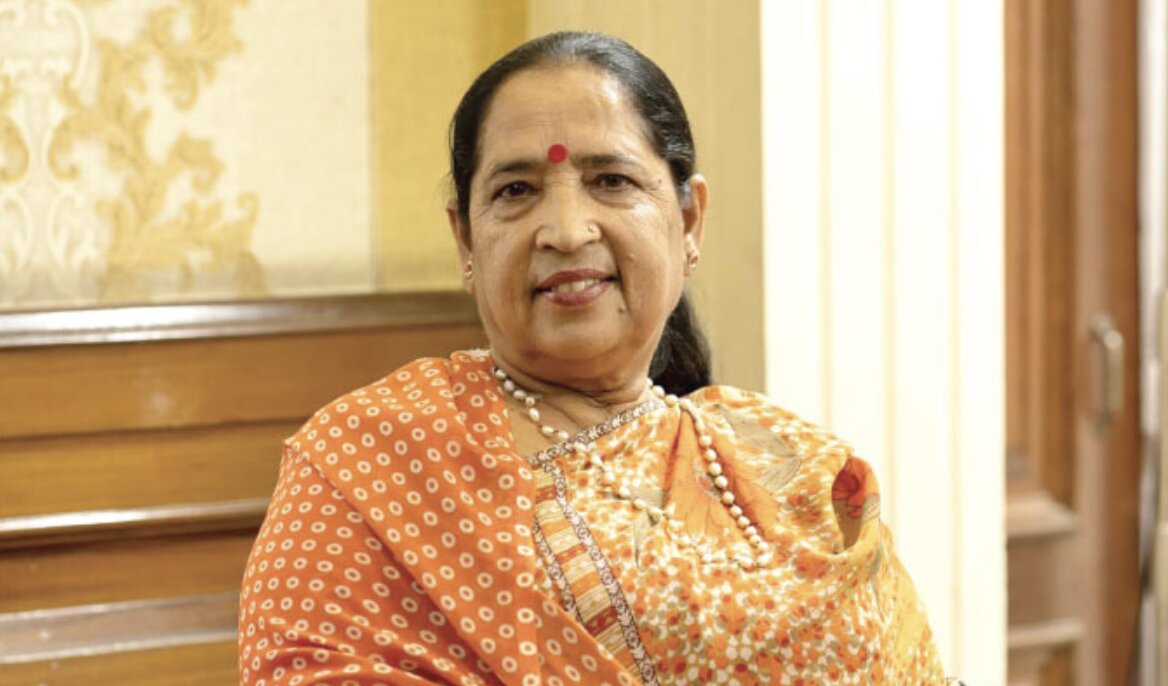
Haridevi Koirala (née Bhattarai) was born in 1959 in Baidam, on the edge of Pokhara in Kaski district, into a large joint household. Her formal career began almost by accident with the song “Paina Khabara” in the mid-1980s, which brought unexpected fame; over the following decades she recorded, by the standard accounts, more than 800 songs across some 80 albums. She is as much a writer as a performer, and her material leans consistently toward social and rural subjects, the joys and hardships of village life and the situation of daughters and daughters-in-law, rather than treating folk music as decoration.
That orientation is exactly what Udi Aayo Rani Chari expresses. The song’s language is plain. There are no theoretical terms in it. There is a sari, three thousand rupees, a chain of gold, a shawl, a ring, a motorcycle, a field a father sold, and a woman crying. The analysis is carried entirely by the story.
SixThree generations in one house
I did not first meet the world of this song in a library. I met it in my family, and the song has since become the frame that lets me see those experiences as connected rather than separate.
My grandmother was married at about ten years old. Child marriage of that kind was not unusual in her generation, and as a child I heard from her a version of a social world in which a girl could be moved from the authority of one household to another before she was grown. Nepali law now sets the marriageable age at twenty and treats marriage below it as a criminal offence, which is one measure of how much the formal rules changed between her lifetime and mine, though rules and practice are not the same thing.
My father was the youngest of five brothers, which made my mother the wife of the youngest brother in a large extended family. In the vocabulary the song uses, she entered as a junior buhari, below the wives of the elder brothers. I noticed, without having the words for it, that when the older brothers and their families visited, or when we went to them for festivals, the relationships were not level. She was expected to help, to serve, to take on work; she was often tense before those visits. The hierarchy was rarely stated aloud. It did not need to be. This is why terms like jethani and devar cannot simply be flattened into “in-law.” They name positions, and positions carry expectations.
The dowry problem itself I saw more directly when I was in Grade 10, when my maternal aunt married. Her parents provided major household goods: a washing machine, a refrigerator, a bed, a television. Within months there were complaints that it had not been enough. Her husband wanted a motorcycle. I remember hearing her crying while she spoke with my mother.
I have tried not to make that memory carry more than it should. But it is the reason the motorcycle in the song is not, for me, a symbol. It is an object I heard being demanded. And that is the thing statistics and case reports tend to miss about dowry: inside families it usually begins long before anything reaches a police station. It lives first as a disappointed remark, a comparison with some other bride, a phone call home, one more item requested. It is the slow communication to a woman that her standing depends on what her parents can still be made to give.
Set beside one another, the three lives do not repeat; they modulate. A grandmother married as a child. A mother placed low in a household order. An aunt caught in a contemporary dowry dispute over appliances and a motorcycle. The particulars change with the decade. The appliances get newer, the cash sums larger, a motorcycle stands in for older forms of property. What holds steady underneath is the question asked of the woman on arrival, what did she bring, in place of the other one, who is she?
SevenWhy the women in the song do not disprove the argument
A reader might object that the villains here are largely women: the mother-in-law who hands back the sari, the nanad who blocks the door, the jethani, the amaju who visits and criticizes. If women enforce the system, is it really patriarchy?
It is, and the song understands why. A hierarchical, patrilocal family distributes authority unevenly among women as well as men. A mother-in-law was very likely a vulnerable young daughter-in-law once; seniority, gained by surviving in place, is one of the few forms of power the structure offers her, and it is exercised downward, on the next woman to arrive. Bennett’s ethnography traces exactly this: women’s standing rises with age and with sons, so the interests of senior women can align with the patriline rather than against it. Oppressive arrangements rarely persist because every participant endorses them. They persist because roles, expectations, and the small rewards of seniority are transmitted through families, generation to generation. That is also why the pattern can survive long after the law has formally banned it.
EightFrom the ledger to the law, and to the morgue
The song’s opening names the hypocrisy directly.
मुखले त भन्छन् सबले दाइजो हाम्लाई चाहिन्न
साँच्चै दाइजो नलिने त कोही पाइन्न
With their mouths, everyone says they want no dowry,
but you will scarcely find one who truly refuses it.
Nepali law says the same thing with its mouth, and the gap Koirala names is precisely the gap between statute and practice. Section 174 of the National Penal (Code) Act, 2074 (2017), the Muluki Criminal Code, prohibits arranging a marriage on the condition of giving or receiving movable or immovable property or dowry. Demanding or accepting dowry as a condition of marriage carries up to three years’ imprisonment and a fine of up to NPR 30,000; demanding property after the marriage, or harassing or degrading the bride or her relatives for failing to provide it, carries up to five years and a fine of up to NPR 50,000. The law deliberately carves out the other category the song is careful about: ordinary customary gifts, reasonable offerings, and a single set of jewellery traditionally worn by the bride are not treated as dowry.
The custom has outlasted the prohibition, unevenly. Dowry is not a single national system, and it would be wrong to imagine every Nepali marriage running on it; gift and marriage economies differ widely across the country’s communities. But the evidence points to particularly serious problems in parts of the Tarai and Madhesh. Peer-reviewed work on violence against women in Madhesh Province identifies dowry, alongside son preference, as a leading driver, and notes that the province records some of Nepal’s highest prevalence of violence against women; the 2022 Nepal Demographic and Health Survey found that 23 percent of women aged 15 to 49 had experienced physical violence since age 15, with Madhesh among the highest.
Koirala ends her indictment where these accounts do, with death.
दाइजोले आज भोलि अतिसारै भाको छ
कतिको त अकालमा ज्यानै गाको छ
The dowry has grown unbearable these days,
some have even lost their lives before their time to it.
The last line is not poetic overstatement. A qualitative study of violence against women in Nepal records that dowry-related abuse can escalate to beating, burning, hanging, poisoning, and torture, ending in apparent suicide or in murder. Nepal Police record dowry-related offences as a distinct category in their annual gender-based-violence data. And the reporting is current, not historical: in November 2025 The Kathmandu Post carried the case of Sanjita Sah, a twenty-eight-year-old woman in Saptari who, after a court marriage to a partner she had met on Facebook, said she had been left “homeless and terrorised” by her husband and in-laws over dowry demands, and had obtained a court protection order she said went unenforced. The paper noted flatly that such violence continues in the Tarai despite the legal ban and years of awareness campaigns. Her father-in-law, a schoolteacher, denied the allegations.
It is worth holding these two things together. The law draws exactly the line Koirala drew, between the voluntary gift and the coerced demand, and a case like Sanjita Sah’s shows how little that line, once crossed, protects the woman standing on the wrong side of it.
NineThe last question
The cruelty the song keeps circling is structural, not just personal. The bride rarely holds the wealth being demanded; her parents do. Yet she is the one punished when it does not arrive. That arrangement lets the husband’s household apply pressure to two generations at once: squeeze the daughter, and the demand travels back up the line to her parents, who may give past what they can afford because the alternative is not embarrassment but fear of what happens to her if they send her back. Koirala compresses the entire mechanism into one line, her father sold his field, and then makes the daughter carry the evidence of that sacrifice into a house that still calls her empty-handed.
And then, at the very end, Koirala does something that lifts the song out of self-pity. She makes the narrator stop thinking about herself and imagine someone worse off.
येति दाइजो ल्याउनेको त मन कति रुनी हो
दाइजो ल्याउन नसक्नी लाई कस्तो हुनी हो।
If the heart of a woman who brought this much must weep so,
what must become of the one who can bring nothing at all?
That is the turn where a private lament becomes a social argument. The narrator has filled a house and is still suffering. If that is her fate, the song asks, what is the fate of the woman whose family had no field to sell? The question is left open, and it should be. It is the whole point that no comfortable answer is available.
Which returns us to the contradiction we began with. A house full of gifts, a woman called empty-handed. By the end of the song the phrase has changed meaning. “Empty” was never a description of what she brought. It was a description of a demand built so that nothing could fill it. The refrain claimed that Nepal loves the dowry more than the daughter-in-law. Verse by verse, gift by gift, the song has simply refused to let us look away while it proves the charge true.
Listen to the song
“Udi Aayo Rani Chari” — Haridevi Koirala
The official Music Nepal upload (2015). Music and lyrics by Haridevi Koirala.
A note on sources
Every factual claim outside my own family experience and the song’s own words is drawn from published sources, listed below. The kinship terms follow linguistic descriptions of Nepali; the reading of Teej as social commentary rests chiefly on Skinner, Holland and Adhikari’s 1994 study and Lynn Bennett’s Dangerous Wives and Sacred Sisters; the legal section follows the National Penal Code, section 174; the violence figures come from the 2022 NDHS, a 2024 peer-reviewed study on Madhesh, and Nepal Police data; the November 2025 Saptari case is from The Kathmandu Post.
A few honest limits: the lyric transcription follows the recording and a Kantipur quotation of the opening verse rather than an official published text; the “800 songs / 80 albums” figures are widely repeated but not from an audited discography; and several legal summaries are practitioner explainers that agree with the Law Commission on the substance of section 174. Where a claim could not be firmly sourced it has been qualified rather than stated flatly.
ReferencesSources
- Bennett, L. (1983). Dangerous Wives and Sacred Sisters: Social and Symbolic Roles of High-Caste Women in Nepal. New York: Columbia University Press.
- Skinner, D., Holland, D., & Adhikari, G. B. (1994). “The Songs of Teej: A Genre of Critical Commentary for Women in Nepal.” Asian Folklore Studies, 53(2), 259–305.
- Nepal Law Commission. National Penal (Code) Act, 2074 (2017), Section 174, Prohibition of transacting property in marriage. Kathmandu.
- Ministry of Health and Population (Nepal), New ERA, & ICF. (2023). Nepal Demographic and Health Survey 2022. Kathmandu.
- “Perceptions on violence against women and its impacts on mental health … a qualitative study from Nepal.” (2024). BMC Women’s Health, 24.
- Nepal Police. Annual factsheet on gender-based violence, FY 2080/81. Police Headquarters, Kathmandu.
- Ram, B. (2025, November 19). “Husband, in-laws accused of torturing woman over dowry.” The Kathmandu Post.
- “Women of Madhesh in dowry’s flame.” (2024, March 22). Kantipur / ekantipur.com.
- Interview with Haridevi Koirala. (2021, August 5). Kantipur / ekantipur.com.
- Marasini, G. “A legend of folk song: Haridevi Koirala.” The Rising Nepal.
- “Hari Devi Koirala.” Wikipedia (biographical details).
- “Kinship Terms in the Nepali Language and its Morphology.” (2012). International Journal of Computer Applications, 58(9).